
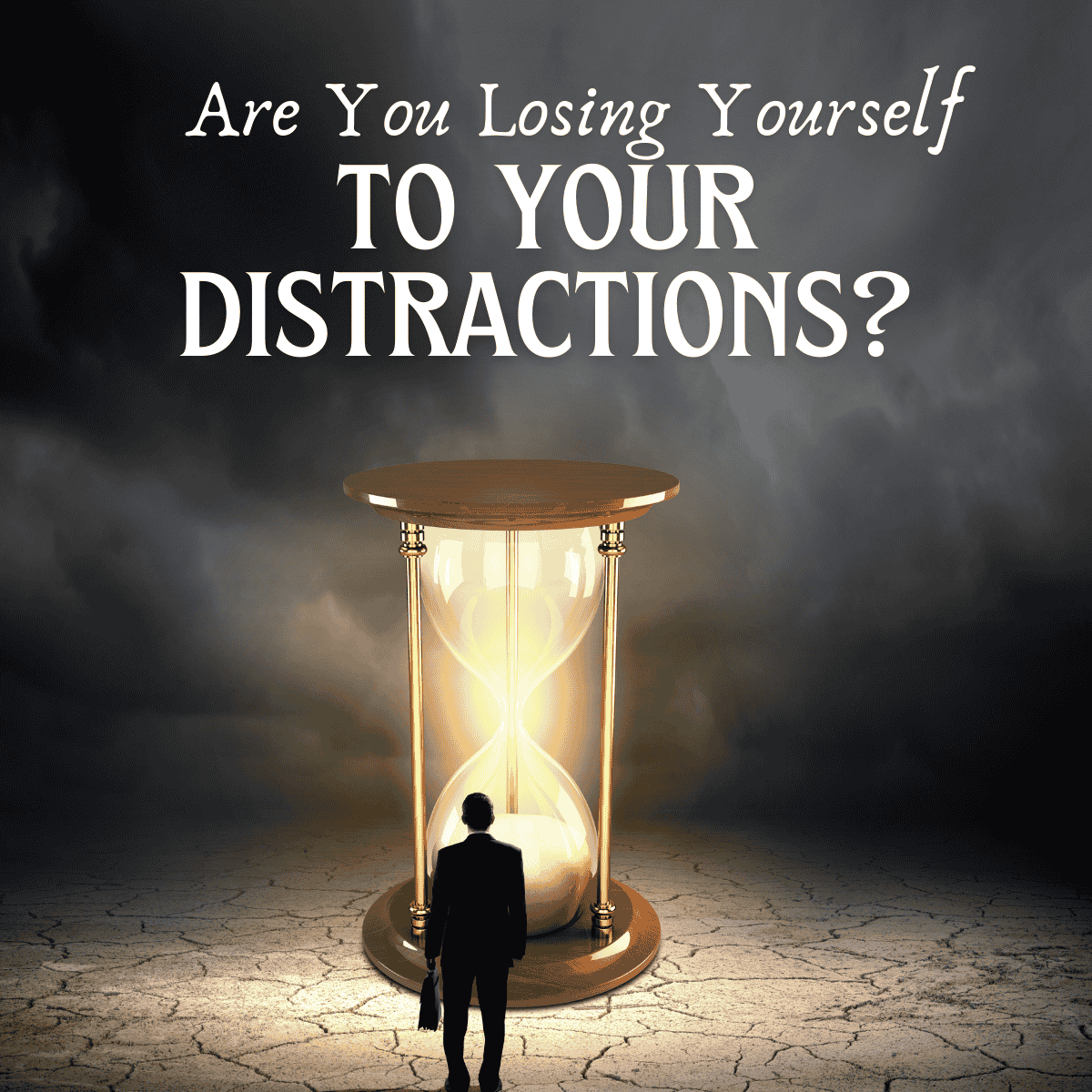
The Poetry of Presence: A Tanka Haiku 5 7 5 7 7 Meditation on Adult ADHD and Distraction
Time slithers away,
unseen by distracted eyes—
sparkles steal focus.
We lament over lost time
but miss the present moment.

Justin Farley
Soul Notes – Poems and Reflections
If you’re searching for meaning in a world that feels too busy, too loud, too dominated by endless scrolling, Soul Notes is a place to feel heard. A few times a month, I send reflections on nature, mental health, and spirituality. Words to carry with you.
This tanka haiku poem for adults struggling with ADHD contains what so many of us feel. It’s a poem about ADHD, distraction, and the elusive present moment. I used the imagery of “sparkles steal focus” because it reminds me of the countless times I’ve been drawn away from what truly matters, lured by the next fleeting distraction.

In our modern, noisy world where we’re always connected to technology, I often find myself struggling with conquering my proclivity to distraction. It’s as if every day, I can’t account for any “real” time I’ve had in the midst of the constant buzz of notifications and the allure of the “shiniest” things. Time feels like it’s moving so fast because it’s slipping away, usually without me noticing it.
Can you relate to any of these thoughts?
Oh, I know I have important work to do, but first, let’s just check the news real quick…let’s just check my email real quick…let’s just check my social media feed real quick..let’s just watch this short video real quick.
A Look Into The Adult ADHD Brain: Why Real Quick Is Never Real Quick
But “real quick” is never real quick. Real quick turns into thirty, sixty, ninety minutes of hyper-focusing before you shake yourself out of the trance you found yourself in. Because that 3-minute video wasn’t the problem. It’s the loop that it started, the loop that it sucked us into without consent where we see another video and another, getting all the dopamine hits we crave.

Finally, we’re able to get down to business…for about an hour until our focus begins wavering and we’re bored. Here comes that familiar voice again: “Oh, I know I still have lots more work to do, but first, let’s just check the news real quick…” and so the loop begins again. This might happen multiple times a day. So at the end of it, we have 6 hours worth of distracted, unplanned, and unproductive time wasted and 2 hours of planned, productive work. We end our day frustrated, defeated, ashamed, and feeling stupid for falling for the same traps time and time again.
Adult ADHD Isn’t Always A Lack of Focus But A Problem With Awareness
The problem is not the original quick task–short video, news, email, etc.–it’s a lack of awareness into who we are and how we’re wired. It’s believing that we can actually watch one video and get back to work. That we can check our email without remembering that we wanted to look up “(insert random fact)”. Or watch a quick video about animals without beginning a hyper-focus journey into innumerable other videos about birds and then crows and then deciding we NEED a pet crow and researching how much they cost and where you might get one…
In the modern world, I think this is a problem for everyone, but it’s a train wreck for adults living with ADHD. Speaking for myself (but I think this applies to most of us with ADHD), being successful and thriving at something is very important to be. I feel like I have so much potential that’s waiting for me to tap into, but my lack of sustained focus derails me. So many hopes and dreams, so little tangible steps that I get around to taking.
In this tanka poem I’ve written, I tried to capture this experience in ways that resonate deeply with those of us living with adult ADHD. A tanka is a Japanese style of poetry that is very similar to the haiku. Whereas the haiku is 3 lines consisting of 5 syllables for the first line, 7 for the second, and 5 for the third; a tanka has five lines (5 7 5 7 7).
The Personal Struggle with Adult ADHD
Living with adult ADHD means that even when I have a clear idea of what I want to accomplish and a plan, the power of distraction can steal my focus. I’ve learned that the inattentive side of ADHD is not just about not being able to concentrate—it’s about missing the present moment entirely; it’s about concentrating on the wrong things. When I find myself daydreaming or letting my mind wander, I know I’m not alone. Many of us share this experience, and it often feels like we’re missing out on so much time. And so much of our precious time is being wasted with nothing to show for it.
It’s not that we can’t concentrate. We can concentrate for hours if it’s on something that’s very stimulating and exciting. It’s the mundane we have a problem with. It’s the rapid firing of ideas that appear out of nowhere that we feel we have to act on right NOW even when they’re not really that important. Finding out how many bones the human body has, how many stars there are, how does a microwave work, and the plethora of random curiosities can wait.
I’ve tried various strategies for managing adult ADHD, such as mindfulness and structured routines, yet the lack of willpower over distraction remains a daily challenge. Whether it’s an unexpected phone notification or a random thought that suddenly captures my interest, the struggle is real. And while these distractions can sometimes lead to creative breakthroughs, they also rob me of time I could be using to truly appreciate and interact with the life around me–the present moment.
Finding Solace Through Poetry
For me, writing a tanka or a haiku is not just an artistic exercise—it’s a meditative practice. Crafting a poem about ADHD or a poem about distraction (or any number of topics in life) helps me understand the world around me, but it also helps me to understand and be more aware of myself. I write a lot of different kinds of poetry but the strict structure of a tanka 5 7 5 7 7 or a haiku 5 7 5 forces me to simplify complex feelings into a few, carefully chosen words. In that moment of creation, I feel more in control of my scattered thoughts.
This creative process is a powerful reminder that, although we might be living with an inattentive mind, we also have the ability to capture moments of clarity. Every time I write a poem about things occurring in the present moment—I am actively choosing to be present. It’s a conscious decision to focus on what matters, despite the allure of distractions.

Reflections on Distraction and the Present
We live in an age where distractions are everywhere. The “sparkles” mentioned in my poem represent those alluring but short-lived pleasures that hold our attention. I often contemplate about how much I lose when I allow these distractions to dominate my focus. When we let our minds run willy nilly without clear goals–and more importantly, clear boundaries–precious time evaporates before we even notice it.
I’ve come to understand that our lives are a collection of moments—each one unique and irreplaceable. Yet, when we are constantly pulled away by the loudest, most attractive stimuli, we miss the quiet beauty of the present. Whether it’s the rustle of leaves on a breezy day or a quiet conversation with a friend, these moments pass by unnoticed if we’re not truly paying attention.
Strategies for Embracing the Present Moment and Dealing With Adult ADHD
My journey toward embracing the present has been gradual. I’ve learned that setting very precise goals with clear steps to achieving that goal or finishing that task is key. For those of us dealing with adult ADHD, creating structured routines can help mitigate the chaos of distraction. Here are a few strategies that I find helpful:
- Mindfulness Meditation: Practicing mindfulness can help anchor your thoughts. A few minutes of meditation each day can improve focus and reduce the impact of distractions.
- Prioritization: By identifying what’s most important, we can filter out the “sparkles” that aren’t truly essential. This helps in managing distraction effectively.
- Time Blocking: Allocating specific periods for work and rest allows me to be more engaged with my tasks. This is especially useful when coping with distractions because you are setting strict boundaries
- Setting Goals Or Tasks With Clear Steps: I’ve learned that adding “clean the kitchen” to my to-do-list isn’t enough to get me to actually do it. It has to be broken down into small, manageable and clear tasks. EX: Clean the Kitchen–1. put away all clean dishes. 2. Load dishwasher and start. 3. Wipe down the counters 4. Sweep the floors. 5. Mop the floors. This gives me clear manageable tasks to complete rather than a broad “clean the kitchen” task where I’ll likely get overwhelmed of deciding where to begin and procrastinate or become distracted.

MOST IMPORTANT: ACCEPT WHO YOU ARE, AN ADULT WITH ADHD
None of the strategies that I or anyone else matter if we don’t first accept certain things about ourselves. For me, this means being more honest about what I can and can’t do. I can’t get meaningful work done with a phone full of distractions next to me. I may have the best of intentions. I may even tell myself I’m not allowed to check my phone. But sooner or later my willpower will dip when I become bored, and I’ll give into temptation.
Maybe you can resist distractions. I can’t. But maybe there’s things I can resist that you can’t. The key is to figuring out what YOU are capable of and not capable of. ADHD is a mixed bag of superpowers and curses. The superpowers can also turn into curses if we don’t use them correctly.
For example, hyper-focusing. We can maintain focus and attention much longer than the average person, giving us an advantage. It’s only an advantage, though, if we set up our lives so that we are hyper-focusing on the right things. It can quickly become a curse if we’re hyper-focusing on our newest hobby or obsession.
Once we learn more about ourselves through self-awareness, these strategies serve as a counterbalance to the internal pull of distraction. They remind us that while we may sometimes lose track of time, we can always reclaim our focus and find meaning in each moment.
Discovering Ourselves Through Creativity
Reflecting on my own experiences, I’ve discovered that my journey with managing my ADHD as an adult is not just about managing symptoms—it’s about learning to live fully in the present and about who I am. What are my triggers? What are my weak areas? What are my strengths? How can I build my day around my strengths while avoiding (or at least minimizing) my weaknesses?
I hope this poem was able to stir something inside of you that may lead to creative insights about yourself or at least that you’ll take comfort in knowing that you’re not alone in your frustration and struggles. As we write our own stories—be it through a tanka haiku poem,a journal exercise, photography, or everyday actions—we acknowledge that every moment, however fleeting, holds the potential for beauty and meaning.
By meditating on what we miss when we’re distracted by the loudest or shiniest things, we can gradually reclaim the present moment. In our shared struggle with adult ADHD, we have the power to make the most of our time and focus our attention on what matters one moment at a time.
Here Are Some More Poems About Mental Health Difficulties and Accepting Yourself:
Like Me – A Poem About Loving Yourself
The Race – Poem about Hard Times and Not Giving Up
Poem About Modern Society Issues and the Negative Effects of Technology


Leave a Reply to Short Haiku Poem About Letting Go of the Past: Live the Now – ALONG THE BARREN ROADCancel reply