
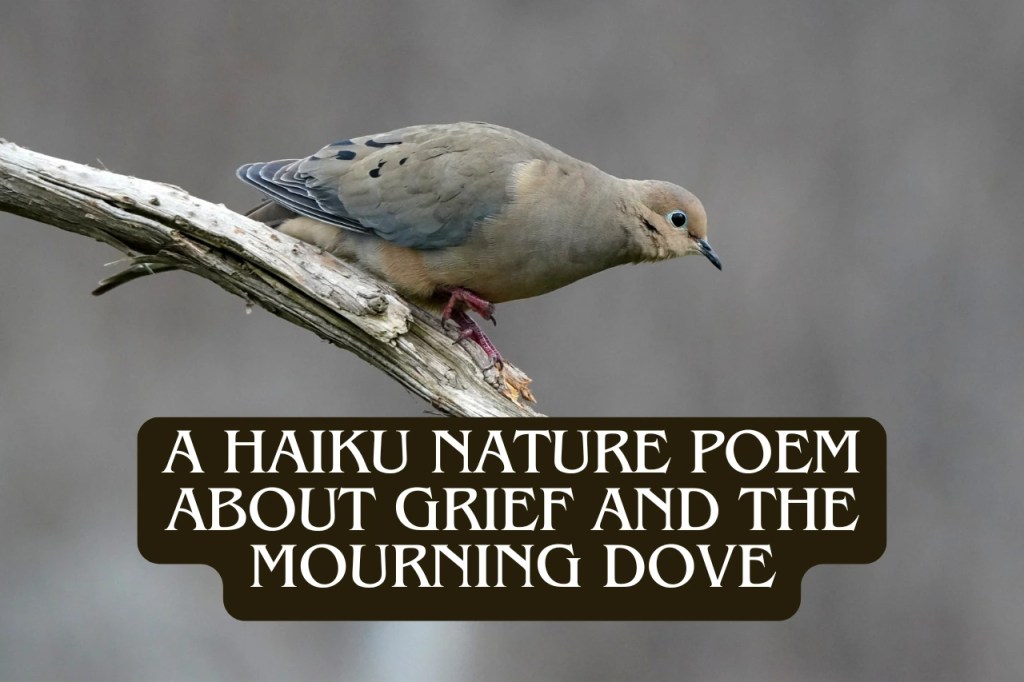
Nature-Inspired Bird Haiku – 5-7-5 Poem About the Mourning Dove
Mourning doves carry a sound that lingers. Their coos that are usually heard just after dawn don’t call for attention. They seem to speak to what’s already aching inside us. This haiku reflects on those quiet moments when grief still exists inside of us after the darkness has subsided in the early light but is no longer as sharp. It’s not gone, just simply softened.
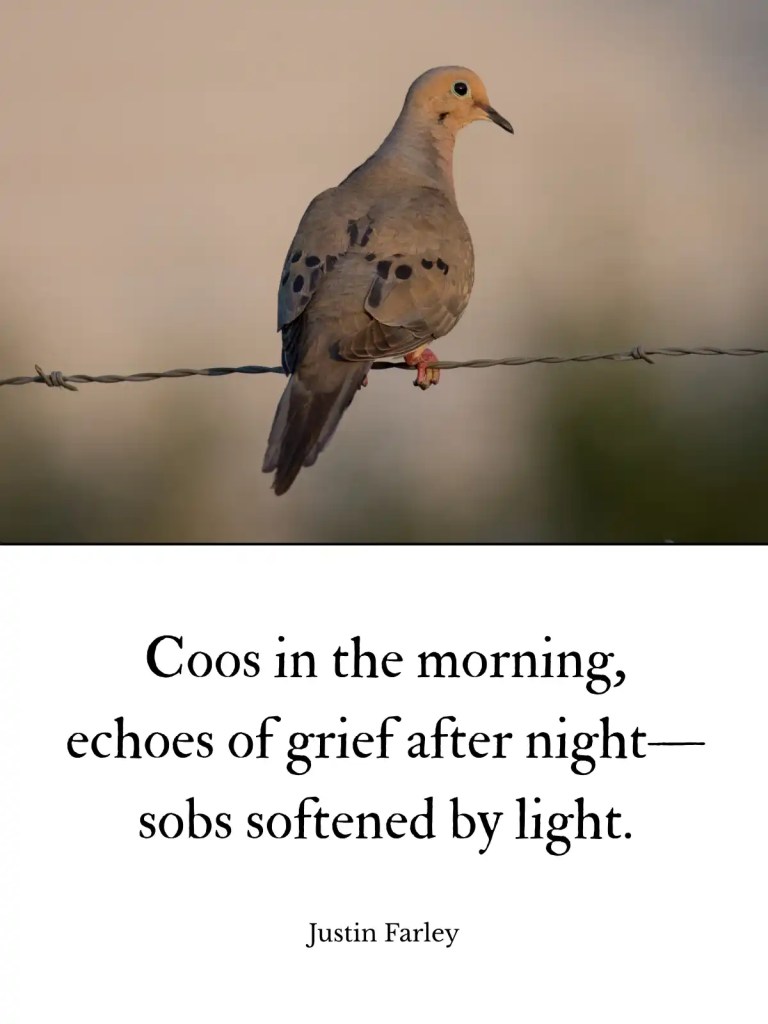
Coos in the morning,
echoes of grief after night—
sobs softened by light.

Justin Farley
Explore My Full Bird Haiku Collection

The mourning dove’s voice has always felt like it comes from somewhere deeper. I’ve heard them on mornings when I didn’t know I needed to grieve, and their call didn’t fix anything, but at least it reminded me I wasn’t alone. This poem came from that place: a sorrow that’s still with you but isn’t as sharp in the quiet warmth of morning as it was in the night, giving hope that the pain will end and healing will come.
Click Here For My Collection Of Nature Poems!

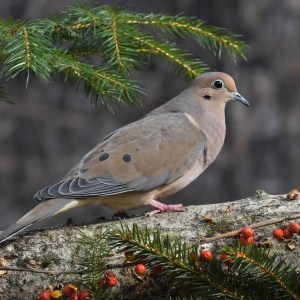
The Mourning Dove is well-known for its coos in the morning hours as well as being associated with pain and grief. Here are some additional quick, fun facts you might not know:
10 Interesting Bird Facts About Mourning Doves
- Mourning doves are named for their soft, sorrowful cooing call.
- Despite their sad-sounding song, they’re one of North America’s most widespread and peaceful birds.
- Their wings make a distinctive whistling sound when they take flight.
- They feed mostly on seeds and can eat quickly to avoid predators, then digest in safer spots.
- Mourning doves form strong monogamous bonds and often return to the same nesting sites.
- They are ground feeders but nest in trees or quiet ledges.
- The male and female share in incubating and feeding the young.
- Their feathers contain an oily coating that helps waterproof them.
- In some cultures, they symbolize peace, transition, and messages from the spirit world.
- Their calm presence and melancholic song often inspire spiritual and poetic reflection.
Have you ever felt a sorrow that stayed with you but softened in the light of a new day? Share your story or reflection in the comments.
NATURE | SPIRITUALITY | MENTAL HEALTH
Join my newsletter to receive new poems along with reflections on nature, spirituality, and mental health (usually a few times a month). My emails are intentional and never spammy—just words to carry with you.
Enjoyed this 5 7 5 nature haiku poem about the Mourning Dove? Here are a few other haiku poems about birds as well as all my online nature poetry.
Bird Haiku Poem About the Great Blue Heron
Short Bird Haiku Poem About the Gray Catbird
Short Haiku Bird Poem About Crows
Short Haiku Bird Poem About the White-Breasted Nuthatch


 ALONG THE BARREN ROAD
Leave a comment