
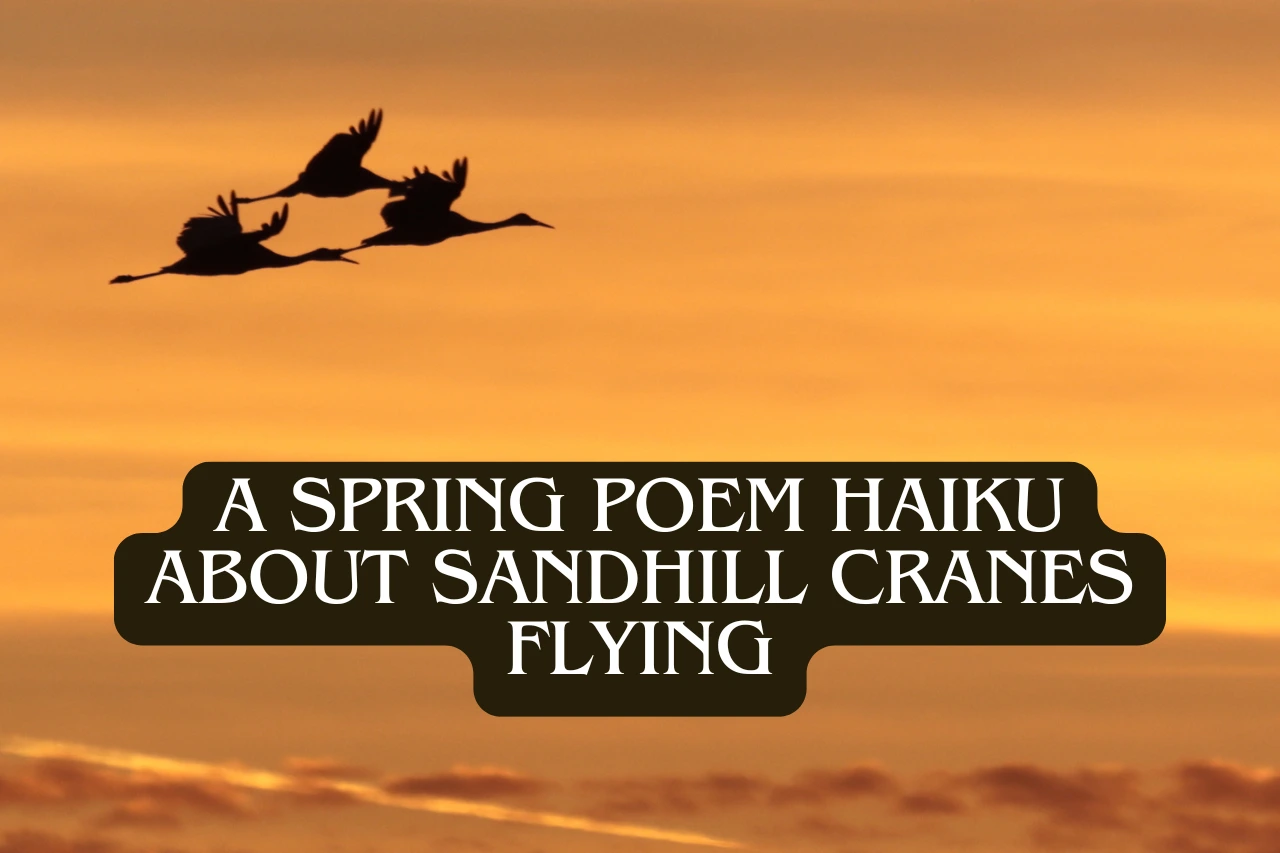
Nature-Inspired Bird Haiku – Sandhill Cranes Announce Spring
When winter loosens its grip, I often hear Sandhill Cranes before I see them—trumpeting high above the clouds, migrating in wavering lines. These migratory birds fly astonishingly high, and their calls echo across the sky like great news from a distant king’s court. To me, cranes are heralds of the season; their voices feel like decrees proclaiming spring’s approach after a long cold spell.
Above cloud kingdoms,
Sandhill Cranes soar as decrees—
seeds begin spring's reign.

Justin Farley
Soul Notes – Poems and Reflections
If you’re searching for meaning in a world that feels too busy, too loud, too dominated by endless scrolling, Soul Notes is a place to feel heard. A few times a month, I send reflections on nature, mental health, and spirituality. Words to carry with you.
Explore My Full Bird Haiku Poem Collection

Every March or so, when I hear the trumpet sounding call of Sandhill Cranes, I’ll pause in the yard, looking across the sky, smiling before I spot them because the sound alone thaws my heart. I love that you can hear Sandhill Cranes before you see them. They are a reminder that winter’s story is ending and spring is already returning to the fields below. Their passage is brief, but it feels ceremonial, like an invitation for us to loosen our shoulders and feel hope that warm weather is coming soon.

10 Interesting Facts About Sandhill Cranes
- High flyers: Sandhill Cranes can migrate at altitudes well over a mile and ride thermals to conserve energy.
- Ancient lineage: Crane fossils closely resembling modern Sandhills date back millions of years.
- Trumpet voices: Their resonant calls come from an elongated trachea that coils in the sternum, acting like a built-in horn.
- Family travel: Mated pairs often migrate with their juvenile from the previous summer.
- Dancing birds: Courtship includes elaborate dancing—leaps, bows, and stick tosses.
- V-formations & thermals: They shift between loose V’s and soaring spirals depending on wind and lift.
- Omnivores with range: Diets include grains, tubers, invertebrates, amphibians, and small vertebrates.
- Wetland nesters: They typically build mounded nests in marshes or wet meadows for protection.
- Long-lived: With low predation as adults, cranes can live two decades or more.
- Iconic stopovers: Massive spring gatherings occur at places like Nebraska’s Platte River—prime time for birdwatchers and inspiration for wildlife poetry alike.

Do you hear cranes before you see them where you live? What sound tells you spring has returned?
Did you enjoy this short haiku poem about morning and crows? Here are a few other haiku poems about birds as well as all my online nature poetry.
A Morning Haiku Poem About Crows At Sunrise
Red-Winged Blackbird Haiku: Echoes of the Meadow
Bird Haiku Poem About the Great Blue Heron
Bird Haiku About Spring and End of Hibernation 5 7 5


Leave a Reply