

I don’t believe mental illness has a one size fits all definition for recovery. It all depends on your goals, your genetics, and the extent of your mental illness. Much like physical illness, there’s some suffering that’s easy to treat and some that’s more complicated.
Sometimes, we have to be content in our suffering, looking for ways to be as comfortable as possible without actually being cured.

Accepting Your Mental Illness
Acceptance for me often looks like being as content, as at peace, as able to find as much joy as possible even though I’m actively suffering. I’ve never given up hope (and hopefully never will) of full recovery from mental illness and the complete elimination of my anxiety disorders, depression, and bipolar disorder, but I’m also realistic. I know that it will likely always be a part of my life.
Acceptance of reality isn’t giving up; it’s the beginning of recovery. Until I can accept a realistic view of where I’m at mentally, I can’t move forward or come up with tangible solutions for current suffering.
Acceptance in Mental Health Recovery and Treatment
My mental illness may very well be incurable to a certain degree. And I’ve gotten more peace from accepting that it’s a part of who I am than fighting desperately to get back to someone who’s “normal”.
Until I can see myself as I am–beautiful and worthy but also deeply flawed–I can’t accept this disease within myself that isn’t going to be eliminated like a simple infection is with the treatment of a quick round of antibiotics. A chronic illness requires a full transformative approach.

When Thinking Positive Is Dangerous
If you’re optimistic and positive in all of the toughest times of life, especially when concerning chronic mental (or physical) illness, it can be outright dangerous and destructive.
Wait. Optimism is bad? And positivity is even dangerous? Yes. It is when optimism or a positive outlook isn’t grounded in reality and doesn’t make room for unforeseen tragedy.
Because optimism is often just a lie to keep hope alive. Sooner or later, though, reality smacks you in the face, and it’s so much stronger than if you would have just faced it head on originally without the sugarcoating. You keep hope alive by accepting life on life’s terms.
Toxic Positivity vs A Hope That Heals
As long as hope is grounded in getting well without a time frame, allows for periods of backsliding during recovery, and tries to make joy the goal rather than happiness, I fully support it.
Don’t Put A Timeline On Mental Illness Treatment / Recovery
But if there’s a firm “recovered by date” then optimism becomes a hindrance to recovery. We should factor in space for the normal ups and downs of life to interfere at times. Of course it’d be awesome to be back to your old self in 30 days, but it’s not going to happen.
So when a month rolls by and you’re not where you thought you should be (God forbid if you’re worse than you started!) you’re going to be devastated. And at two? Three months past? Each day you deal with mental illness past your original goal date of being healed causes anxiety and one more thing to be depressed and overwhelmed by.
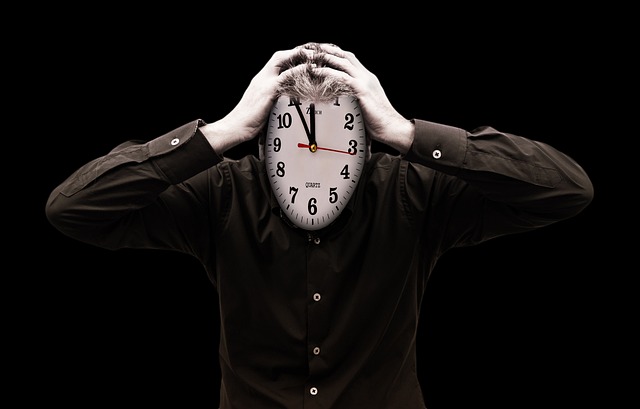
Frustrated by Mental Health Treatment
But often, we become frustrated –devastated even–because we continue to view our current mental affliction through the eyes of our old, healthy self. So what’s the solution?
We must allow the old self to die despite how painful it is. We must accept that we will likely never be the person we once were. And that’s ok.
It doesn’t mean that life is over–just the life we originally pictured for ourselves. Often, though, life has a way of giving us the challenges that mold us into our best selves rather than the easy path we would have taken that would never have challenged us.
Letting Go Of Who You Used to Be and Accepting Who You Are Now
Looking back on my life it’s a lot easier now to see that I was never normal, even as a child. I had a lot of the same issues with mental health then; I just wasn’t aware of them.
One of the great temptations and roadblocks to recovery is reminiscing about the old you, a you before the crippling anxiety, depression, or cycles of mania. It gives us the impression that this mental health crisis is some kind of temporary phase that can be treated AND REVERSED.
It can be treated; it’s just not guaranteed. And it’s not reversible. You will always carry the pain you went through inside of you. It doesn’t have to define you, though. You just have to allow yourself to accept a new identity in recovery.

Love Yourself, Embrace Yourself As You Are – Full of Mistakes and Mentally Ill
We must learn to love and accept ourselves depressed, anxious, and / or manic. We must accept that we are full of darkness but also light. And that light is unique and vulnerable, strong enough to help others look inside their own hearts.
It is only by letting go of the past and accepting who we are now that we can be of use to anyone in the future.
When you go through mental health problems it changes you as any form of trauma does. Your behaviors and thought processes are not the old you. Forget the old you. Embrace and love the new you just as you are.
Acceptance is the first key to moving forward with recovery. As long as we’re fighting the shadow of who we once were, we’re always going to be behind and frustrated.
Ashamed of My Mental Illness
One of the main forces keeping us from moving forward in our mental health journey is shame. I’ve always been ashamed of my mental illness. I still am to some degree, but it’s taken a lot of work to get from where I was.
People often say that mental illness is nothing to be ashamed of. They’re right but that doesn’t change the way you feel inside.
You look around and feel like you’re the only one with these problems. You’re the only one who has the anxiety, the depression, the mania that makes you feel crazy because you’re unable to always respond the way you’d like in a given moment.
Dealing With Anxious / OCD Tics
I’ll speak to anxiety / agoraphobia because it’s the one I deal with the most of the three mentioned. When I’m extremely stressed or having a panic attack, I have all kinds of anxious tics that come with my anxiety disorders.
Examples of my anxiety tics are twirling my hair, constant fidgeting, the need to pace, a yawn like motion of the mouth, the inability to talk right because I’m hyperventilating, etc. All of these things make me feel like a target, a symptom of my inadequacy.
My agoraphobia is often directly proportional to my shame. The more insecure I am about my anxiety, the more embarrassed I am, and ultimately, the more scared I am to go out in public or leave the confines of my room on my worst days. To deal with my agoraphobia means emboldening my self-esteem. If I can’t face the insecurity within myself, how can I expect to face the world?

Accepting Yourself Is the Only Way Forward
The point is, I realize these things aren’t normal reactions everyone else in the world is having. But until I accept that it’s normal for me, they’ll only get worse because I’m terrified of being found out. Terrified of being labeled or looked at a certain way in public.
Anxiety and mental illness are not my identity. But they are a part of my identity. As long as they’re not, I’ll be unable and unwilling to accept who I am.
Accepting that you’re mentally ill isn’t resignation; it’s staring the problem in the face and tackling it head on so that you can live a life of dignity and begin to recover.
But when you look around at others, realize that everyone is dealing with something. Everyone has all kinds of mess inside them even if they’re better at hiding it. Some are even experts at hiding it from themselves and never realize why they feel so empty all the time. Be grateful we at least know what our problem is.
How Realistic Hope Can Help Mental Illness
When we accept and love ourselves as we are we can begin to have real hope. Our hope has to be more than just a desire to get better. Mental health is a journey. There are no quick fixes.
Realistic hope looks something like, “How can I be better today than yesterday? What small, manageable goals can move me forward towards my ultimate goal of full recovery?”

However, there are some days when actually doing something like exposure therapy, exercise, or even something as basic as taking a shower seems overwhelming.
During these times, you must be gentle with yourself. You may not be able to take physical action but maybe you can try to adjust your mindset instead.
Turning negative thoughts into positive thoughts isn’t as black and white as we’re taught to believe. If we’re able, it’s wonderful to turn a negative thought completely around. But for the clinically depressed or anxious that’s not always possible.
Improving Your Mental Health Little Bits At A Time
Think of the the cumulation of all your thoughts as a sliding scale. Negative at 0 and positive at 100. I’ve always found it more helpful to think of increasing my number on the scale rather than turning thoughts around. For me, that can seem impossible and unrealistic.
But I can challenge the thought. I can do my best to increase the number of positive thoughts I have and be aware of the times I’m creating negative ones. During a panic attack let’s say I’m 80% convinced I’m going to die. If I interpret “positive thinking” as no longer thinking I’m going to die, I’m going to get frustrated and begin wallowing in self-pity.
Challenging Your Negative, Anxious Thoughts
Yet, maybe I make my goal to weaken the belief I’m going to die. “Is this really realistic? You’ve had tons of panic attacks before, and you’ve survived. Panic attacks are scary but not dangerous.” In the moment, I’m likely not going to fully believe the challenges to my anxious thoughts. I can at least reduce their power, though. `Maybe after challenging my negative thoughts I’m now only 40% convinced I’m going to die. That’s cut the negative belief in half. That’s real hope!
Because if my hope of getting better depends on being 100% convinced I’m safe–AKA recovered, normal–I’m going to feel hopeless and give up. You don’t lose 100 pounds overnight. It takes months and months of doing the little things right, shedding little bits of weight every week.
Unrealistic Expectations Are The Enemy Of Recovery
The same thing is true about mental illness. You can’t snap your fingers and be better as awesome as that would be. We have false expectations that medication is going to immediately get rid of the problem. That’s almost certainly not going to happen. Medication is a tool not a solution. Along with things like exercise, healthy eating habits, and meditation; medication is a key part of recovery. But it doesn’t cure us.
Hope To Get Better From Depression, Anxiety, Bipolar, and Other Mental Disorders
In a nutshell, real hope for recovery from mental illness depends on realistic expectations and flexibility. We can have hope for full recovery in the future, but we should also have hope every day. We shouldn’t discount the possibility that we will always struggle with our mental health. In that case, we have to learn to have hope to live a full and happy life despite being ill. That kind of hope prevails even when circumstances change and life doesn’t go the way we expect it should.
Comparison, shame, and unrealistic expectations are our greatest obstacles in recovering from mental illness. To have real hope we have to defeat all three.
1. Comparison Is Self-Defeating and Kills Your Self-Esteem
Compare yourself and your obstacles to no one. No one has your exact challenges so comparing your results to someone whose race is much easier is folly.
2. Shame Destroys Your Confidence And Keeps Us From Moving Forward
You didn’t cause your mental illness and you can’t will it away. It’s not your fault. Shame will only leave you drowning in your troubles. Most people have compassion and are more understanding than we give them credit for. And if they aren’t that’s on them.
3. unrealistic expectations kill hope and leave you feeling defeated
Putting fixed dates and milestones on our recovery timeline will only frustrate and set us back. When we view ourselves and the world in black and white categories, we set ourselves up for failure.
We are not sick or cured. We are recovering–hopefully not just from mental illness but from all the rest of the troubles that plague the human race. Our real hope is to be our best self every day. The standards vary depending on what we’re going through, but the goal stays the same. Be the best you can be RIGHT NOW.
Only then, can we really move towards recovering from anxiety, depression, bipolar disorder, and any other mental disorder that we are struggling with.

Keep fighting. Keep your hope alive by identifying small changes you can implement right now. Real recovery isn’t complicated. We usually know the things we could be doing but aren’t. Hope that by doing more of the little things that positive change will come.
May you find peace on your journey and trust that despite how dark things are there’s still light to be found if we search for it.
If you enjoyed this post, please considering sharing it. I have five poetry collections that are available on Amazon. Two of these deal with my personal experiences living with mental illness. See the links below. Please also consider joining my mailing list for any news about new projects I’m working on or deals on my books. I also have a second blog I just started that focuses around simple living called Life’s Marrow. Here’s the link if you’d like to check it out–www.lifesmarrow.com
You may also enjoy these posts of mine:
Stopping the OCD and Anxiety Spirals of Negative Thoughts
Poem About Panic Attacks Agoraphobia and Anxiety Disorder
Be The Best Version Of Yourself
Becoming Happier By Changing Our Perspective
An Ode To Joy – A Poem About Hope
I have 5 published books of poetry, 2 of which deal heavily with mental illness: Frozen Rivers and Blossoms of Hope. You can find the link to them on Amazon in my books tab.
Frozen Rivers: Poems About Winter and Mental Illness

Blossoms of Hope: Inspirational Poems About Mental Health and Spring





 ALONG THE BARREN ROAD
Leave a comment